
Professor Lynne Oats – Lynne oats is an Emerita Professor of Taxation at Exeter University. Her research interests centre on taxation as a social and institutional practice, embracing historical and contemporary tax policy both nationally and internationally. In addition to holding senior editorial roles, Lynne has published widely in the accounting and taxation fields.

Professor Carla Edgley – Carla Edgley is a Professor in Accounting and Taxation, Cardiff Business School, Cardiff University. She is an Associate Editor of Critical Perspectives on Accounting Journal, and the Interdisciplinary Accounting Review. Her research interests are in interdisciplinary, social studies of accounting and taxation.
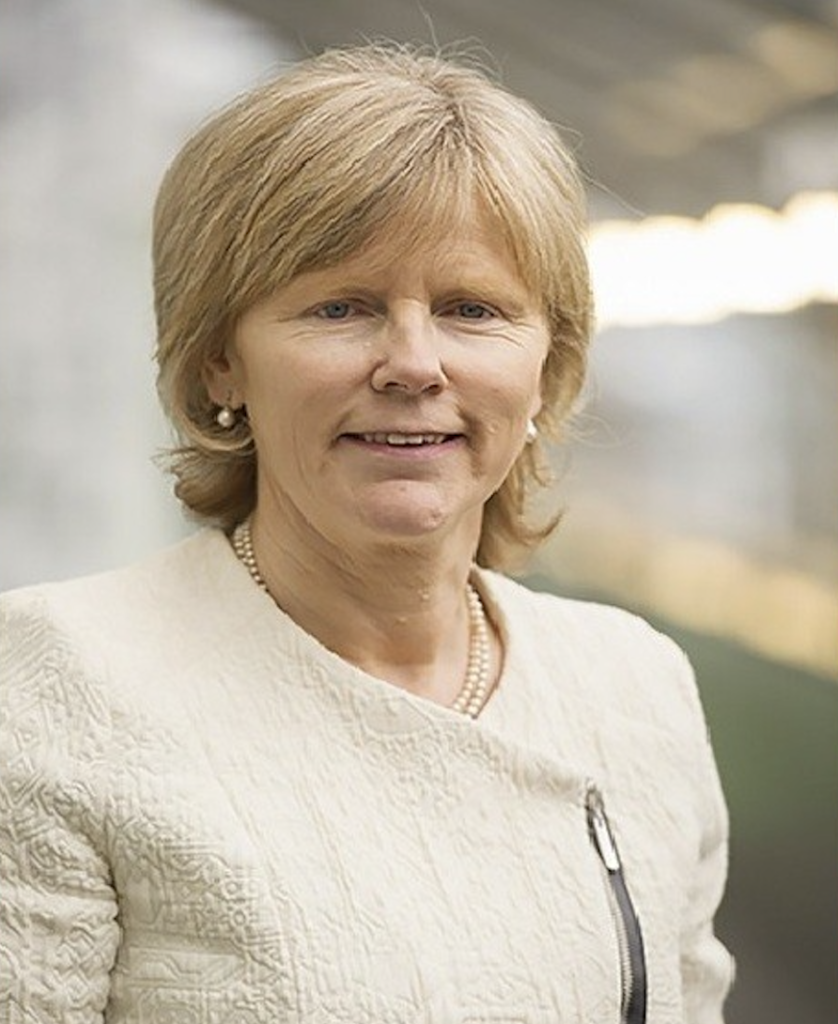
Professor Emer Mulligan – Emer Mulligan is a Personal Professor of Taxation and Finance, Head of the Accountancy and Finance Discipline and Director of the Tax Clinic, at the J.E. Cairnes School of Business and Economics, University of Galway, Ireland. Her research interests are in the intersection of social policy, citizenship and taxation, as well as regulatory relationships and compliance in the tax arena.
In an era marked by global disruption and mounting pressures on public finance, tax systems are under intense scrutiny and the need for critical tax scholarship is more pressing than ever. Building on the legacy of the 2010 tax special issue of Critical Perspectives on Taxation, a follow-on special issue is now available online.
In our editorial, ‘Critical Perspectives on Taxation: In praise of heterophony’, we explore what it means to be a critical scholar and a critical tax scholar today (Oats, Edgley & Mulligan, 2025). This blog piece provides a brief overview of the editorial which is structured into three main sections.
Reflecting on Topics and Trends in Recent Tax Research
The first section commences with reflections on developments in critical tax research since 2010 – within and beyond Accounting. While some progress has been made in Accounting, we highlight innovative, inspirational tax research that has emerged in other disciplines including Fiscal Anthropology, Fiscal Geography and Law and Society among other domains. We also, however, observe the continuing, pervasive influence of economics in tax scholarship. This dominance, often referred to as “economic imperialism,” frames tax primarily as an economic issue, sidelining its social and political dimensions.
Papers in the Special Issue
In section two, we discuss featured contributions in the Special Issue and how they engage in myth-busting across tax narratives.
One contribution examines conflicts of interest in tax scholarship in Finland, by Santtu Raitasuo. This paper explores how tax academics often have multiple roles in Finland, as educators and researchers but also practitioners providing tax advisory services to clients. He addresses a myth whereby legal scholarship, which is a particularly important resource drawn upon by the judiciary, is assumed to play an influential ‘objective’ part in legal interpretation. He develops an argument that tax academics are in positions where they have an incentive to propose legal arguments in scholarly work that advance the interests of their private clients. This in turn influences the judiciary and distorts the distributive effects of the tax system in favour of tax advisory clients (Raitasuo, 2024).
Ute Schmiel confronts what she argues to be a persistent myth that hinders the development and implementation of wealth taxes. Her paper highlights arguments that are often employed to stymie discussion such as difficulties in measuring wealth, defining the concept of ‘ability to pay,’ and addressing the mobility of the wealthy elite. Politicians tend to shy away from this debate, despite calls from NGOs and the OECD to reflect on the low level of tax revenues that are generated by so called wealth taxes globally. Schmiel’s paper challenges this status quo by asking whether there are reasons to tax wealth from a tax equity perspective reimagining the concept of ‘ability to pay’ and wealth, by referring to political-cultural market theory (Schmiel, 2024). Her paper is particularly meaningful as wealth taxation is currently a topical issue. Many governments in countries such as Norway and Australia as well as organisations like the OECD are debating how to address rising inequality and fiscal pressures following recent global crises
A third paper by Dennis de Widt and Lynne Oats challenges the assumption that cooperative compliance between tax authorities and large corporations is always driven by high-level expertise and mutual trust. By comparing the UK and Netherlands, the authors show how similar regulatory systems can evolve differently. They introduce a novel framework viewing these interactions as dynamic strategic action fields where different actors like tax authorities, businesses, and advisers interact, negotiate, and shape each other’s behaviour around tax compliance within the broader tax landscape. Notably, the study shifts focus from corporate tax avoidance to everyday practices, revealing that most large firms aim to comply (De Widt & Oats, 2024).
The fourth myth exposed, by Maryse Mayer and Yves Gendron, is about the role of the media in reporting tax scandals. The authors focus on how the media have represented the controversial phenomenon of corporate tax avoidance by exploring the international “LuxLeaks” news leak, and scandal. Given the enormous influence of the media over societal views around corporate tax behaviours and tax avoidance, this paper explores formulaic ways of reporting. The authors bring to the fore, how the subject of tax avoidance is characterised by an ambiguous normative framework, as the media rely on very different norms to elaborate distinct normative standpoints (Mayer & Gendron, 2024).
Together, these papers exemplify the potential of critical scholarship to disrupt dominant narratives and to open new avenues for inquiry.
Critical Perspectives
In the third section of the paper, our reflections, we explore what it means to be a critical scholar, particularly within the field of tax scholarship, and the challenges but also meaningful opportunities that come with this commitment. While there are many ways to approach critical work, Mouritson et al. (2002) remind us that, at its heart, being critical means refusing to be naïve and questioning how power dynamics shape and influence tax systems.
We introduce examples of scholarship that illustrate what we call “four critical moves—and mixed moves,” offering strategies inspired by music and song lyrics to expand research perspectives and reveal blind spots.
Move 1: Filling the silences – our understanding of tax is replete with silences; caught up with disciplinary strictures, but also things that policy makers do not want to hear. There are myriad gaps, blind spots, unexplored areas, and things we otherwise never see to be investigated in tax research.
Move 2: Expanding the repertoire – it has long been a concern that where the scope of tax research is narrow, misunderstandings follow. A tight focus on technical aspects of tax overlooks the ‘why’ and ‘who’ questions: why are particular policies pursued, and who sets the agenda, for whose benefit? This critical move looks beyond the constrained repertoire of tax knowledge and expertise to consider the wider context. This includes drawing on new ways of thinking about tax issues.
Move 3: Probing the lyrics – this move encourages reflexivity about how narratives are woven around tax issues where phrases are used as if they have a singular agreed meaning, when they carry multiple meanings and resonate differently with different audiences.
Move 4: Unsticking the needle – a stuck needle on a vinyl record results in the same musical phrase on repeat. We often see, for example, debate around aspects of fairness in tax systems stuck in such a loop. Similarly, discussion around wealth taxes has, in many jurisdictions, become the tax equivalent of Groundhog Day. This move encourages us to break away from entrenched ways of thinking by looking at particular causes and issues from a different angle to reveal the limitations of established positions and taken for granted myths.
Mixed moves and evolving moves – these moves are such that authors may adopt more than one move. it is important to probe, with a critical eye, the power dynamics that stifle debate. We discuss in our conclusion the potential that multiple voices and performers have for critical tax research, playing melodies in different but complementary ways to add broader perspectives and dimensions
Concluding Thoughts
We advocate for heterophony in tax research, not just a multitude of voices (where many voices blend in harmony), but many different voices that strengthen the texture and quality of our work, and a richness of distinct voices engaging in ‘simultaneous otherness,’ fostering creativity and substantial impact.
This issue is a call to action, to question dominant narratives and reimagine the possibilities of tax research. We urge broader engagement, mentorship, and support for early-career scholars, and we emphasise the importance of building a vibrant and inclusive community of critical tax researchers. We need to think about how to enable scholars to join this conversation, and how we mentor the next generations of students, especially PhD students, to explore inspirational new directions, not only in the strands of tax they study but also in how research is approached. This requires both top-down and bottom-up efforts. Senior scholars can provide guidance, share expertise, and foster supportive networks and structures, while early-career colleagues play a pivotal role from the ground up, in bringing fresh perspectives into research, and challenging established assumptions. As a community we can organise workshops, reading groups, and events that foster inclusive dialogue, support PhD students.
Creating such a community means fostering spaces for dialogue, collaboration across disciplines and geographies, and sustained support for emerging scholars. Looking ahead, we hope to see critical perspectives on taxation continue to grow, not only in number, but in depth, diversity, and influence.
References
De Widt, D., & Oats, L. (2024). Imagining cooperative tax regulation: Common origins, divergent paths. Critical Perspectives on Accounting, 99, 102446.
Mayer, M., & Gendron, Y. (2024). The media representation of LuxLeaks: A window onto the normative dynamics of tax avoidance from a socio-legal perspective. Critical perspectives on accounting, 99, 102480
Mouritsen, J., Larsen, H. T., & Hansen, A. (2002). “Be Critical!” Critique and Naivete—Californian and French Connections in Critical Scandinavian Accounting Research. Critical Perspectives on Accounting, 13(4), 497-513.
Oats, L., Edgley, C., & Mulligan, E. (2025). Critical Perspectives on Taxation: In praise of heterophony. Critical Perspectives on Accounting, 102794.
Raitasuo, S. (2024). The conflict of interest in tax scholarship. Critical Perspectives on Accounting, 99, 102394.
Schmiel, U. (2024). Wealth taxation of individuals and equity: A political-cultural market theory perspective. Critical Perspectives on Accounting, 99, 102465.